

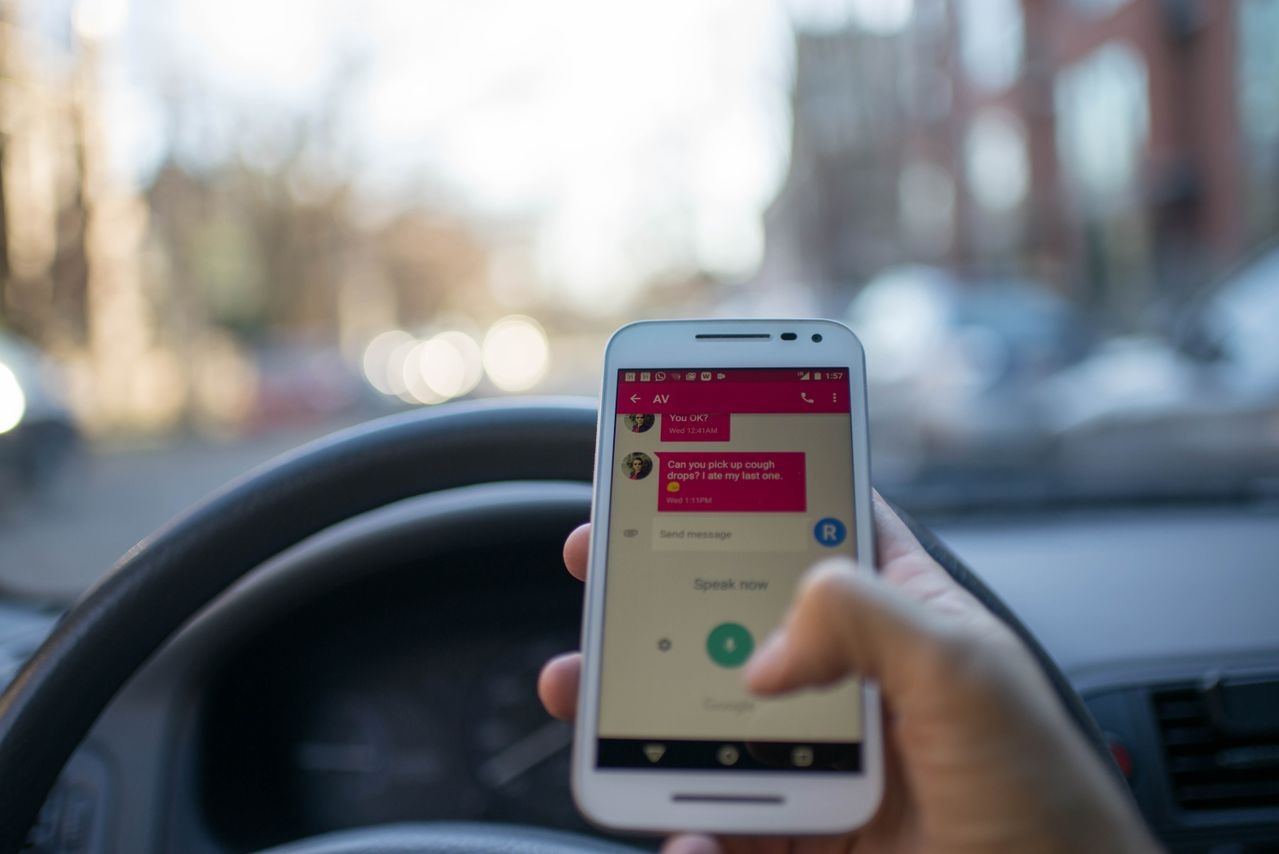
You saw the other driver looking down just before the crash. You may have noticed a phone in the driver's hand, or a witness may have told police that the driver appeared to be using one. The driver may even have received a citation at the scene. Now you are dealing with injuries, medical appointments, vehicle damage, and an insurance claim, and you want to know what that phone use means for your claim.
Pennsylvania recently strengthened its distracted-driving law. Under Paul Miller's Law, drivers generally cannot hold or support an interactive mobile device while driving. But if you were injured in a distracted driving accident, evidence that another driver was holding or using a phone does not automatically decide who is legally responsible.
The important questions are what the driver was doing in the moments before the collision, whether that conduct contributed to the crash, and what the available evidence establishes.
What Does Paul Miller's Law Mean After a Pennsylvania Crash?
Paul Miller's Law took effect on June 5, 2025, making prohibited handheld-device use a primary offense in Pennsylvania, which means police can stop a driver for that violation alone. The one-year warning period ended on June 5, 2026. A violation now carries a $50 statutory fine, with additional court costs and applicable fees.
The law is broader than Pennsylvania's earlier prohibition on texting while driving. It generally prohibits a driver from holding or supporting an interactive mobile device while operating a vehicle. That prohibition also applies during brief stops caused by traffic or traffic-control devices, including red lights and stop signs. Emergency use is permitted when necessary to communicate with law enforcement or emergency services to prevent injury to people or property.
That means a driver does not have to be actively typing a text message for the new handheld-device prohibition to apply.
For someone injured in a crash, however, the traffic law is only one part of the larger question of why the collision happened.
Does a Handheld-Phone Violation Automatically Prove Fault for a Crash?
No.
A Paul Miller's Law citation can identify phone use as an issue to investigate, but the fact that a citation was issued does not by itself establish civil liability.
A personal injury claim still requires proof that the driver's conduct contributed to causing the crash and the resulting injuries. Even when a driver violates a safety law, Pennsylvania law treats causation as a separate question. The violation has to be connected to what actually happened.
Consider two different situations. In one crash, a driver is holding a phone immediately before drifting across a lane line and striking another vehicle. In another, a driver is holding a phone when a vehicle from another direction unexpectedly enters the driver's path. The phone use is a fact in both situations, but determining its role requires examining how the collision actually occurred.
The existence of a phone violation alone does not answer what caused the collision, which is why the surrounding circumstances still matter.
What If the Driver Was Not Given a Citation?
If the other driver was not cited, that does not by itself answer whether distraction contributed to the crash.
Police officers investigate potential traffic violations based on what they observe and the information available at the scene. A civil injury claim involves its own examination of the circumstances surrounding the crash.
An officer does not have to personally witness every event that later becomes relevant to the civil claim. Witness accounts, dashcam or surveillance footage, statements, and other evidence can provide information about what the driver was doing immediately before impact that was not available when police investigated the scene.
At the same time, an injured person should not assume that evidence of distraction exists simply because the other driver looked down or failed to stop in time.
The question remains: What does the evidence actually show?
What Evidence Can Help Show Whether a Driver Was Distracted?
Determining whether phone use played a role often means looking beyond the citation itself.
Depending on the circumstances, relevant evidence can include:
- Statements from drivers, passengers, pedestrians, or other witnesses
- Dashcam footage
- Surveillance video from nearby homes or businesses
- Photographs of the crash scene and vehicle damage
- Information documented during the police investigation
- Statements made by the driver after the collision
- Vehicle data or other electronically stored information when relevant and available
- Phone-related or other electronic information obtainable through appropriate legal procedures
Not every type of evidence exists in every case, and phone records do not automatically establish what a driver was doing at the precise moment of a crash.
Timing matters when evidence could disappear or change. Surveillance footage can be overwritten, witnesses can become harder to locate, and physical conditions at the scene can change. Preserving available evidence helps create a clearer picture of what happened rather than relying solely on competing recollections later.
At AlpernSchubert, P.C., we evaluate the available evidence together to understand what happened before impact and whether phone use actually contributed to the crash.
What If the Insurance Company Says You Were Partly at Fault?
Evidence that another driver was distracted does not erase the other circumstances surrounding the crash. If an insurance company argues that you also contributed to what happened, speed, sudden changes in traffic, visibility, road conditions, the movement of other vehicles, and your own conduct can all become part of the liability analysis.
Pennsylvania follows a modified comparative negligence rule.
Sharing some responsibility for a crash does not automatically bar an injured person from recovering damages. Recovery is barred when the injured person's causal negligence is greater than that of the defendant or defendants from whom recovery is sought. When recovery is permitted, the damages are reduced according to the injured person's percentage of negligence.
If several actions contributed to the crash, each person's conduct has to be evaluated in context.
Why the Seconds Before Impact Often Matter Most
After a serious crash, people understandably focus on the moment of impact. Determining why that impact occurred often requires looking at what happened immediately beforehand.
- Was traffic slowing?
- Did the vehicle drift across a lane?
- Was the driver looking down?
- Did the driver brake before impact?
- Was the crash at a Pittsburgh intersection, in stop-and-go traffic, or on a highway?
- Was the hazard visible long enough for a driver to respond?
- Did another vehicle, a road condition, or another event contribute to what happened?
Those details help place alleged phone use into context.
For example, evidence that a driver was holding a phone becomes more meaningful when it can be connected to driving behavior, such as failing to notice stopped traffic, crossing a lane line, missing a traffic signal, or failing to react to a hazard.
The goal is not simply to establish that a phone was present. It is to understand whether distraction contributed to causing the collision.
Were You Injured in a Distracted Driving Crash in Western Pennsylvania?
When phone use is suspected after a crash, understanding what happened requires connecting the available evidence to the driver's actions before impact. Whether distraction played a meaningful role in the collision depends on that fact-specific analysis.
At AlpernSchubert, P.C., we represent people injured in motor vehicle accidents in Pittsburgh and throughout Western Pennsylvania. We evaluate the circumstances of each crash and how Pennsylvania law applies rather than assuming that one fact decides the outcome.
If you were injured in a crash in Pittsburgh or Western Pennsylvania and believe the other driver was holding or using a phone, we can review what happened, the evidence available, and how Pennsylvania law applies to your situation. To get started, use our contact form to schedule a consultation to discuss your case.
Disclaimer: Results may vary depending on your particular facts and legal circumstances. The articles on this blog are for informational purposes only and are no substitute for legal advice or an attorney-client relationship. If you are seeking legal advice, please contact our law firm directly.